Proving Them Wrong Forever
An Asian American country singer, and the engine a lot of us were handed early.

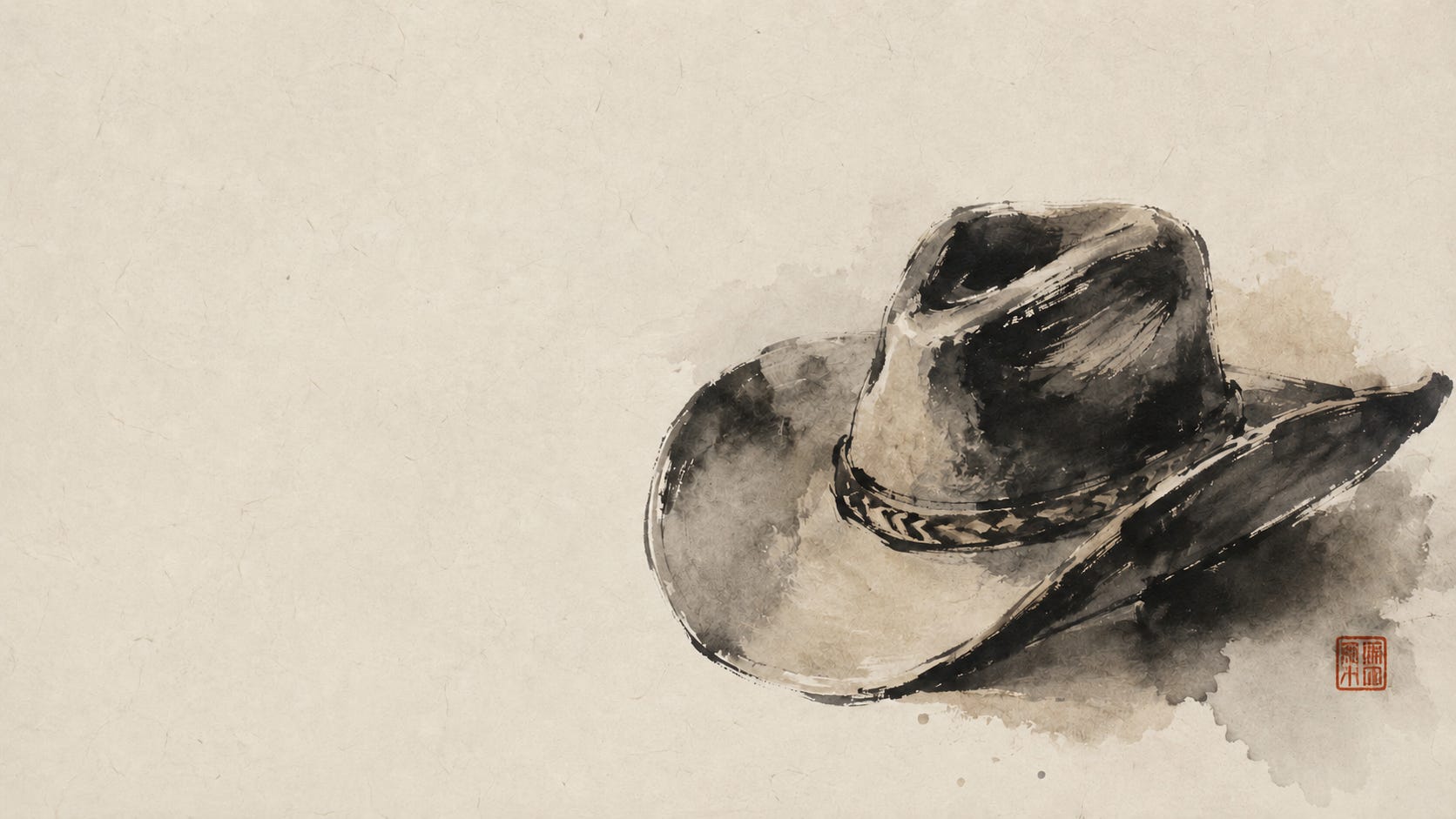
A country song came across my feed this week, and the singer was a man named Travis Yee — Asian American, from San Francisco, now writing in Nashville. He’s good. The genre is what got me. Country is about the last room you’d expect to find someone who looks like us standing in, and he’d walked in anyway, in the boots, and written a song about it.
The song is called “Prove Em Wrong,” and the premise is right there in the title. People had told him an Asian guy doesn’t belong in country music — strangers online, and people who should have known better. The song is his answer. Don’t wait to be let in; pull on the boots and make them watch. It’s built to get you up out of your chair, and it mostly works.
And then there’s the part I kept turning over after the chorus faded, because I know the engine he’s running on. A lot of us do.
When I was a kid I thought the proving was about school, because school was where it showed up first and loudest. It was never only about the grades, though. The grades were just the nearest door. Underneath them sat something older and more general than any report card — a standing assumption that the welcome was conditional, that I’d have to be undeniable before I could afford to be unremarkable, the way other kids got to be unremarkable for free. That’s what makes Travis a sharper case than the usual one. He didn’t go excel in a lane anyone expected of him. He went straight at the genre most sure he had no business in, and sang. The engine goes looking for closed doors. School is just the first one most of us find.
What the anthem leaves out is what happens after. Proving them wrong doesn’t end the way winning is supposed to. If your belonging is something you earn by being too good to dismiss, then you’re only ever as settled as your most recent proof. The account doesn’t close. There’s always another room, another crowd that hasn’t heard of you yet. The win that was supposed to buy you a place turns into the rent you keep paying on it.
Psychologists have a name for this machinery, or close to it. Jennifer Crocker and Lora Park spent years studying what they call contingencies of self-worth — the domains a person stakes their value on, so that doing well there doesn’t only mean you did well, it means you’re worth something. Their unhappy finding is that the relief never holds. Success quiets the fear for a while, then the fear comes back and the proving resumes, and no amount of it can guarantee the thing you’re afraid of won’t happen again. And the chasing costs you the thing it was supposed to win. When your worth is riding on every outcome, you get so trained on what each moment says about you that you lose track of the person in front of you, so the hunt for being valued quietly spends down the closeness it was meant to secure. Recognition, as they put it, was never the same thing as being loved.
For a lot of the kids I grew up with, achievement and belonging got tangled together early — the first standing in for the second, which nobody was going to just hand over. You couldn’t be from here, not all the way. Some people belong by default; others are made to feel theirs is conditional, earned and re-earned on proof that you’re enough — conditional belonging, in the sociologists’ term. It gets sharper if you’re Asian and grew up here: you read as not-from-here no matter how many generations deep you go, the perpetual foreigner of the psychology literature. An Asian American in a cowboy hat is almost a diagram of it. So you make yourself too good to wave off. And it works. That’s the whole trap. It works well enough that you keep feeding it, long after the original crowd has gone home.
It isn’t only a cost, though. That same engine is why Travis Yee has an album instead of a grievance, why there’s someone singing now in the one room that was supposed to stay shut. It built things. It built me — parts of me I’d keep, parts I’m not interested in apologizing for. The people I admire most are running some version of it under the hood. I don’t want to stand here and tell you the engine is the problem, because it’s also the reason for half of what I’m proud of.
What I don’t know is whether you can keep the engine and lose the part where it never lets you rest. Whether there’s a version of proving them wrong that you can finish — that buys the place once and lets you stop paying — instead of the lifetime subscription most of us seem to have signed without reading. I haven’t found that version. I’m not sure it exists. I’m not sure the people selling the anthem have found it either.
Travis Yee is going to keep singing, and the people who said he doesn’t belong are going to keep being out there, because the doubt is structural; it regenerates faster than anyone can answer it. He’ll prove them wrong again next week, and the week after. I find I’m rooting for him and a little worried for him in the same breath, and I can’t pull the two apart. That might be the most honest thing I have to say about the whole arrangement: about the song, and about the kids who’ll hear it and feel seen, and feel, somewhere under the being-seen, the small click of the meter starting to run.